What Causes Basement Walls to Bow and Why It Matters for Repairs
Basement walls are designed to resist the pressure exerted by the surrounding soil. Over time, however, certain environmental and structural conditions can create forces strong enough to push those walls inward. What often begins as a small crack or slight inward movement can gradually develop into a significant structural concern if left unaddressed.
Understanding the causes of basement wall movement is critical because the long-term performance of any repair depends on properly identifying and addressing the source of the pressure.
Carbon Guard reinforcement systems are engineered to help stabilize foundation walls experiencing inward movement caused by lateral soil pressure and related structural stresses.
COMMON CAUSES OF BOWING BASEMENT WALLS
Hydrostatic Pressure
Hydrostatic pressure is one of the leading causes of basement wall movement.
When the soil surrounding a home becomes saturated with water, pressure begins to build against the foundation wall. The deeper the wall, the greater the pressure exerted against it. Over time, this constant force can cause the wall to crack, bow inward, or shift.
Common indicators of hydrostatic pressure include:
- Horizontal wall cracks
- Water seepage
- Damp basement conditions
- Efflorescence on masonry surfaces
- Inward wall movement
Poor exterior drainage conditions often accelerate this process by allowing water to collect around the foundation.
Carbon Guard Solution
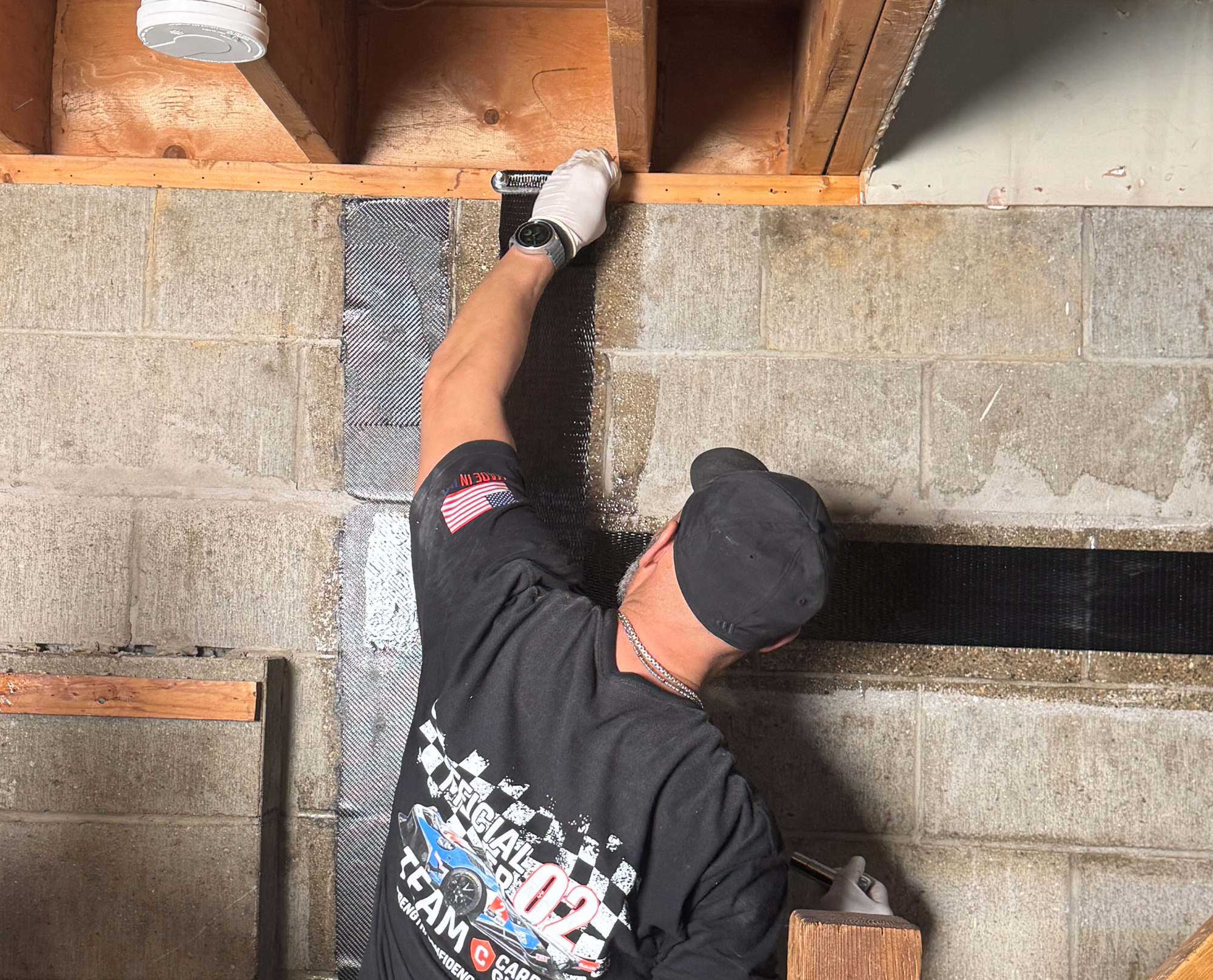
Carbon Guard systems are designed to reinforce foundation walls against lateral pressure using high strength carbon fiber straps anchored at both the top and bottom of the wall. When combined with proper drainage corrections, Carbon Guard systems help stabilize walls and resist further inward movement.
Expansive Soils
Certain soils, particularly clay based soils, expand significantly when they absorb moisture and contract as they dry. This constant cycle of expansion and contraction places substantial stress on foundation walls.
As expansive soils push against the wall, the foundation may begin to:
- Bow inward
- Develop horizontal cracking
- Tilt inward
- Experience shearing near the base
These conditions are especially common in regions with fluctuating moisture levels and seasonal weather changes.
Carbon Guard Solution
Carbon Guard provides a low profile reinforcement solution capable of helping stabilize walls subjected to expansive soil pressure. The high tensile strength of carbon fiber allows the system to resist continued movement while maintaining usable basement space.
Poor Drainage Around the Foundation
Water management plays a major role in foundation performance. When water is allowed to accumulate near the home, the surrounding soil becomes heavier and exerts increased pressure against the foundation wall.
Common drainage problems include:
- Negative grading
- Clogged gutters
- Short downspout extensions
- Failed footing drains
- Landscaping pitched toward the home
- Improper runoff management
Over time, these conditions can contribute to both water intrusion and structural wall movement.
Carbon Guard Solution
Carbon Guard systems are often installed as part of a comprehensive repair strategy that includes improving exterior drainage conditions. Stabilizing the wall while correcting the source of excess moisture helps reduce future stress on the foundation system.
Tree Roots Near the Foundation
Large trees and aggressive root systems located too close to the home can contribute to foundation movement in several ways.
Tree roots may:
- Displace surrounding soil
- Create localized pressure against the wall
- Interfere with drainage systems
- Alter moisture levels in the soil
Over time, these changing soil conditions can place additional stress on basement walls and contribute to cracking or inward movement.
Carbon Guard Solution
After the source of the pressure is addressed, Carbon Guard reinforcement systems can help stabilize affected walls and provide long term structural support without the intrusive appearance of traditional steel reinforcement systems.
Freeze Thaw Cycles
In colder climates, freeze thaw cycles can create repeated stress against foundation walls. As water in the soil freezes, it expands. When temperatures rise, the soil contracts again. This ongoing cycle can gradually weaken foundation walls and worsen existing cracks or movement.
Freeze thaw cycles may contribute to:
- Worsening horizontal cracks
- Increased inward wall movement
- Masonry deterioration
- Structural weakening over time
Carbon Guard Solution
The high tensile strength of carbon fiber reinforcement helps stabilize walls against continued lateral movement associated with seasonal soil expansion and contraction. Carbon Guard systems are designed to reinforce the wall while maintaining a clean, low-profile appearance.
Warning Signs of a Bowing Basement Wall
Homeowners should be aware of the common signs of structural wall movement, including:
- Horizontal cracking
- Stair step cracking
- Walls leaning inward
- Separation near the floor or ceiling
- Water intrusion
- Uneven floors above the basement
- Doors or windows sticking
- Cracks widening over time
Early detection and repair can help prevent more extensive structural damage. It is critical that the company, inspector, or engineer evaluating the foundation is highly familiar with these warning signs and fully understands what each condition may indicate. An improper diagnosis can result in the wrong repair approach being recommended, potentially leading to additional structural damage or creating a false sense of security regarding the stability of the foundation.
Why Carbon Fiber Reinforcement Is a Preferred Solution
Modern carbon fiber reinforcement systems have become a preferred stabilization method because they provide:
- High strength reinforcement – Greater tensile strength than steel
- Minimal disruption during installation
- Low profile appearance
- No bulky steel beams
- Long term stabilization performance
The Carbon Guard product line was developed specifically to help stabilize basement walls affected by bowing, tilting, and shearing forces while preserving usable basement space. Its unique anchoring systems and engineered spacing charts provide an elevated level of foundation support resulting in and extended, transferable warranty.
Final Thoughts
Bowing basement walls are often the result of multiple contributing factors, including hydrostatic pressure, expansive soils, drainage problems, tree root activity, and freeze thaw cycles. Left unaddressed, these forces can continue to worsen over time and compromise the structural integrity of the home.
Proper evaluation, moisture management, and reinforcement are critical to achieving long term foundation stability.
Carbon Guard reinforcement systems are designed to provide homeowners and contractors with a clean, effective solution for stabilizing foundation walls. By addressing all 3 types of inward movement, Carbon Guard helps protect the structural integrity of the home for years to come.