Carbon Fiber Wall Stabilization for a Bowing Foundation
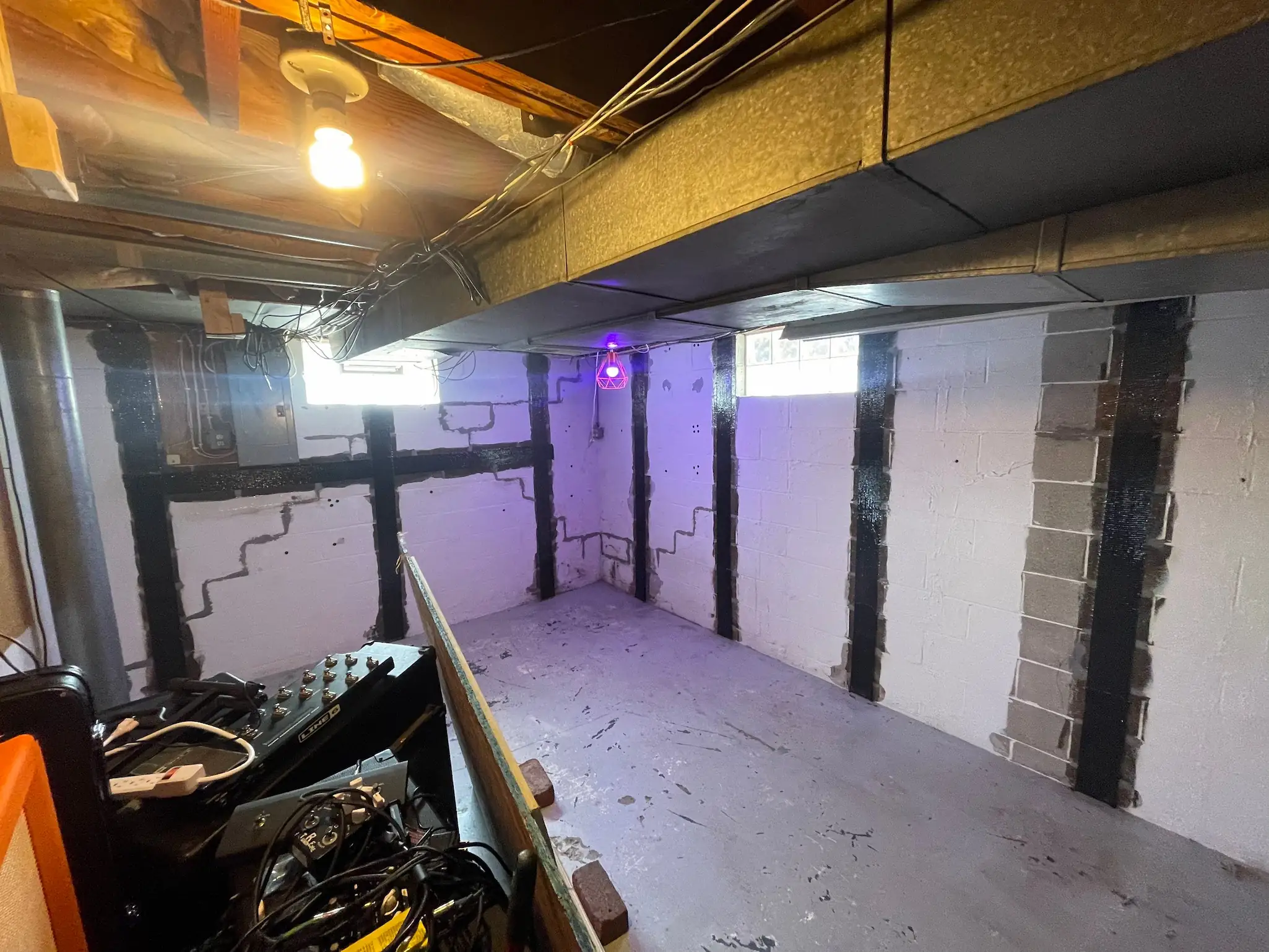
When an Akron homeowner noticed foundation cracks worsening over time, an evaluation identified inward wall movement caused by lateral soil pressure rather than settlement. The Fortress Stabilization Carbon Guard System stabilized the affected wall without exterior excavation, using a customized strap layout to work around an electrical panel and basement window.
PROBLEM
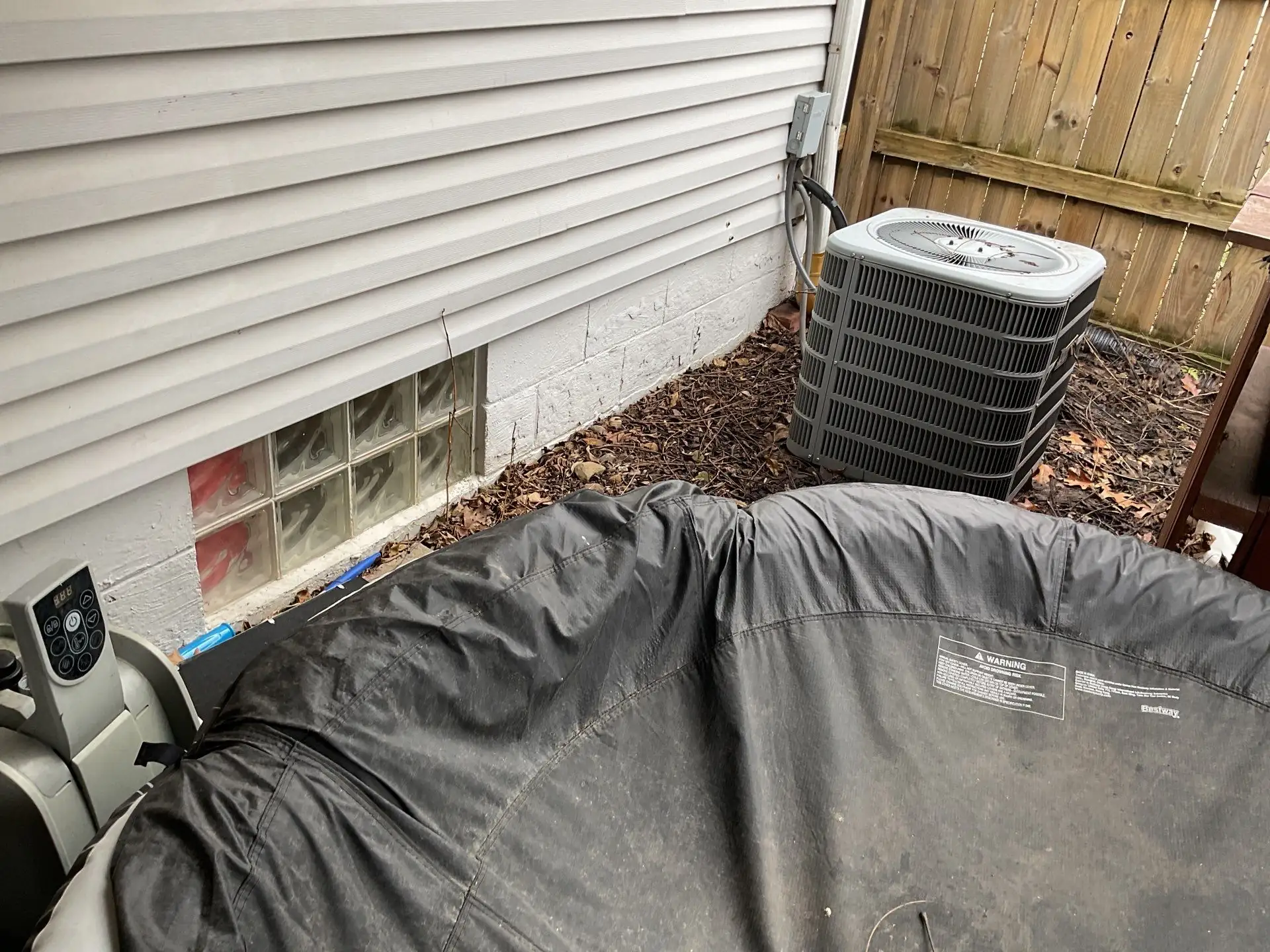
An Akron homeowner discovered foundation cracks that were gradually worsening. An inspection identified trees and shrubs planted directly along the foundation, poor exterior grading that allowed water to accumulate near the home, and increased hydrostatic and lateral earth pressure against the wall.
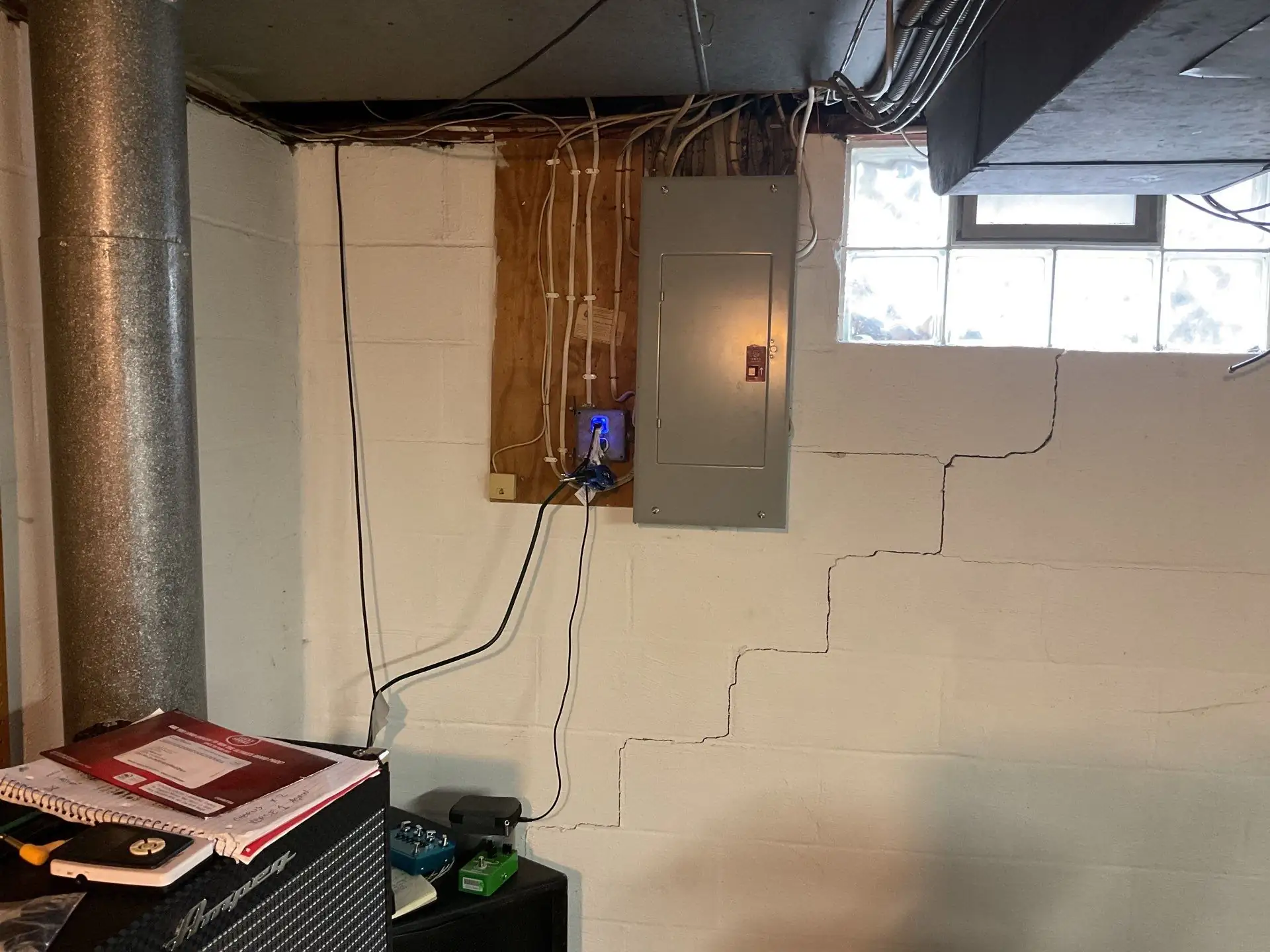
Recorded measurements showed a maximum tilt of 7/8 inch, maximum bowing of 1/2 inch, and 0 inches of shearing. The evaluation identified lateral inward movement rather than settlement-related displacement, with movement remaining within the allowable tolerances for Carbon Guard reinforcement installation. Correctly distinguishing between these conditions was essential to selecting the right repair.
SOLUTION
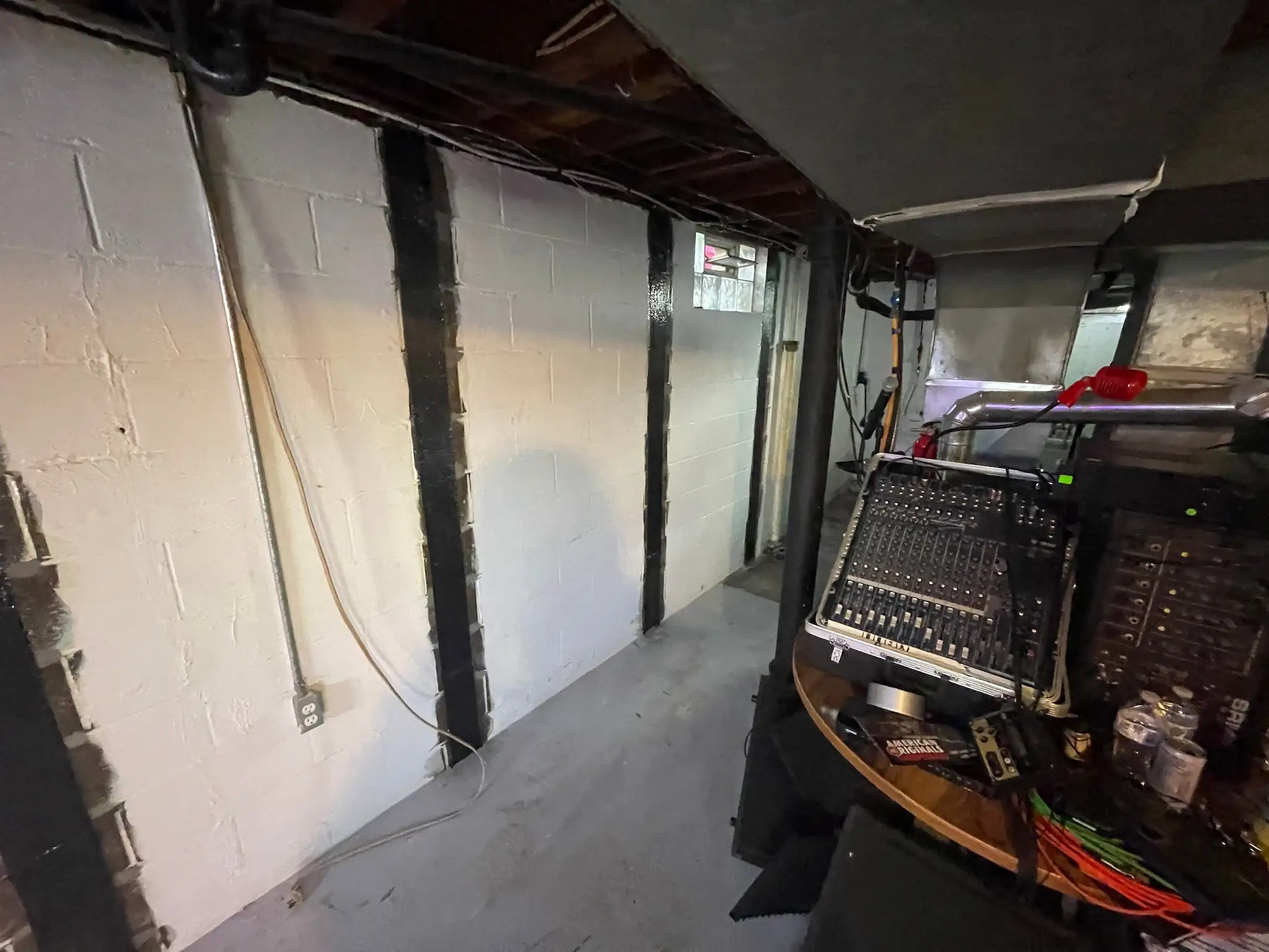
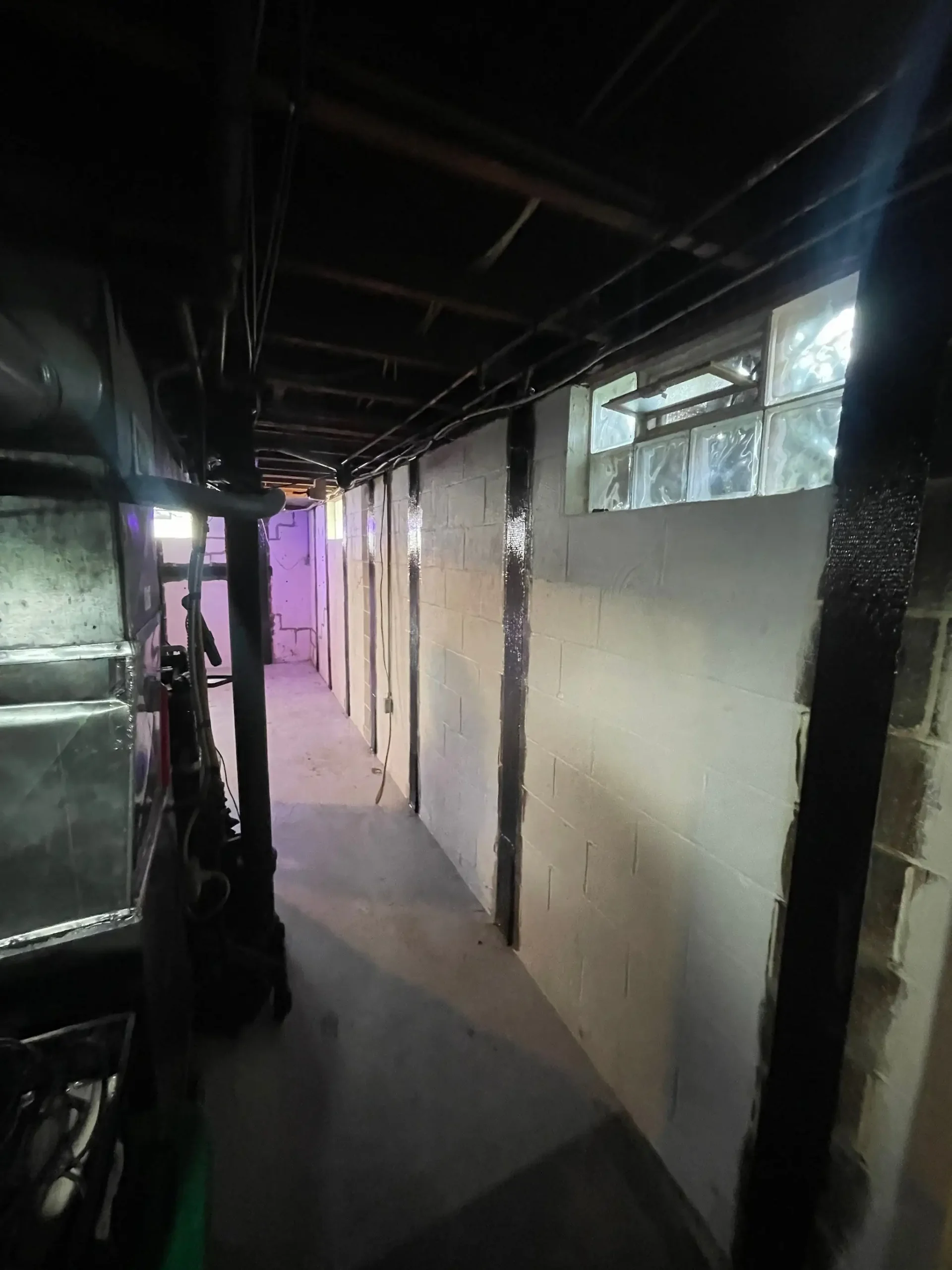
The Fortress Stabilization Carbon Guard System was selected based on the wall height, soil conditions, and observed deflection. This fully anchored carbon fiber stabilization system resists additional inward movement by transferring loads through bonded carbon fiber reinforcement and anchored connection points. Straps were installed at approximately 48 inches on center according to the guidelines for the observed wall conditions.
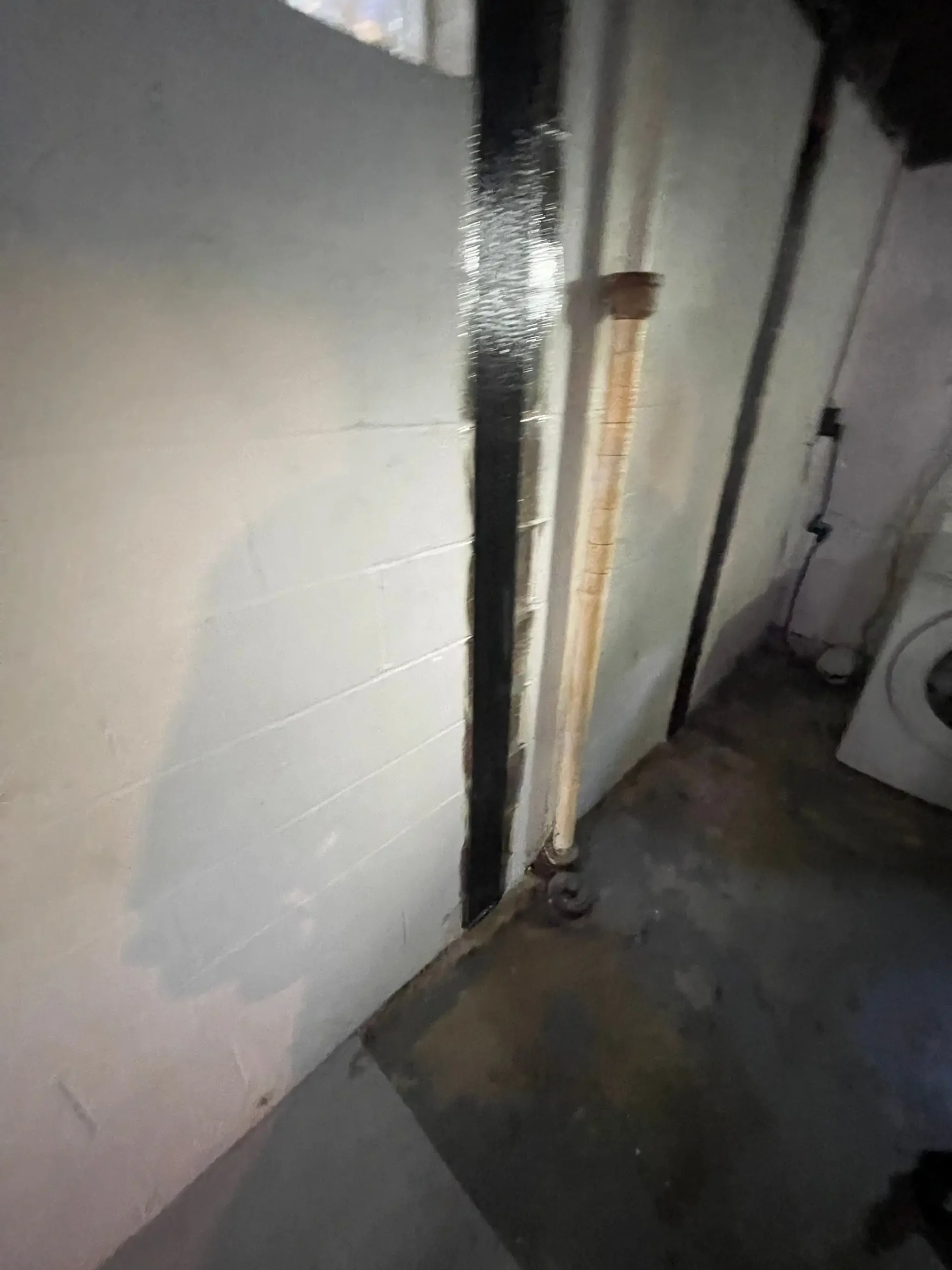
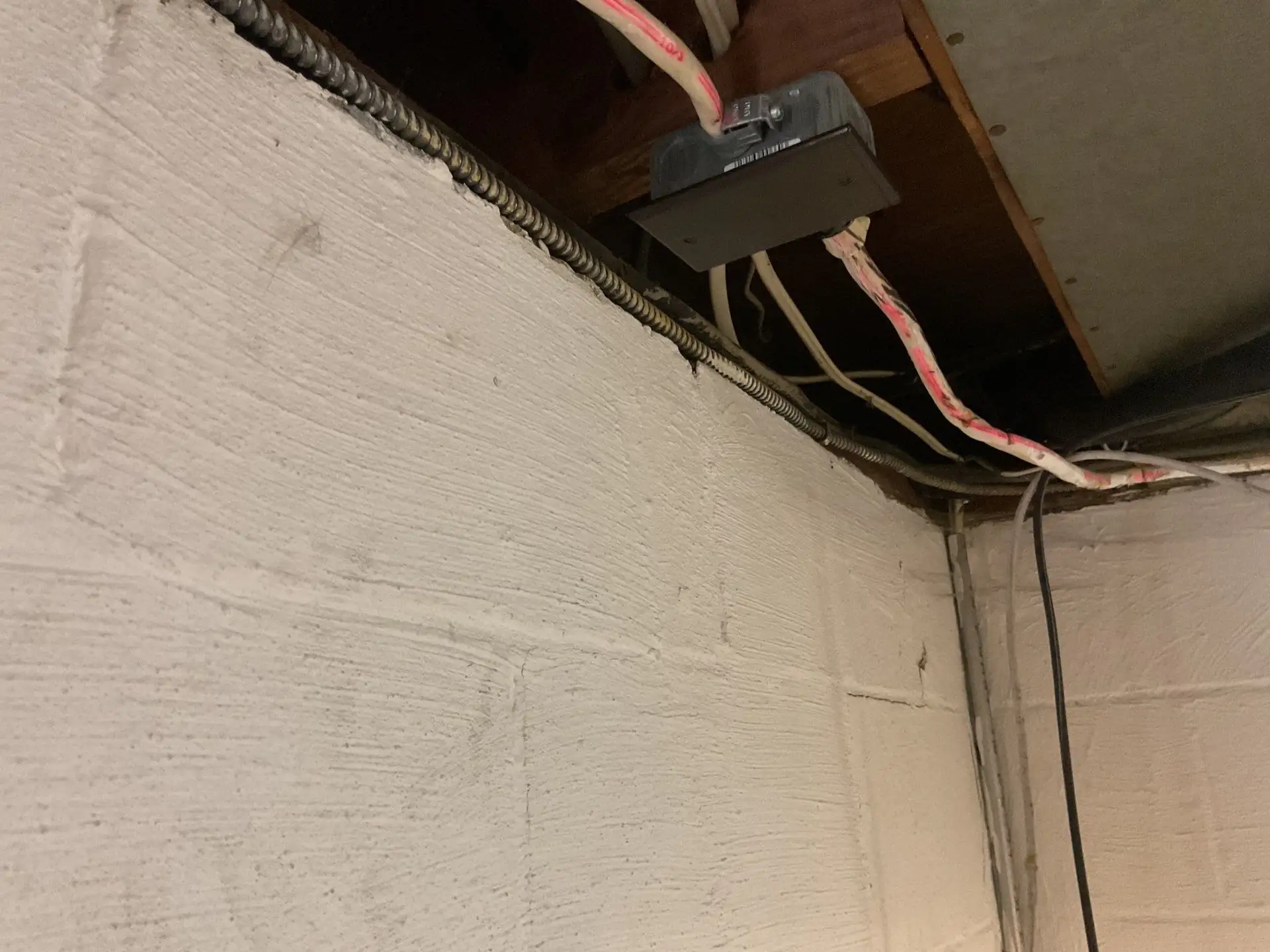
An electrical panel prevented standard strap placement, so the layout was adjusted to position one strap to the left of the panel and another beneath a nearby basement window. Because the strap beneath the window could not extend the full wall height, the system was configured to transfer tensile loads between adjacent straps while maintaining secure anchorage into the sill plate structure. This arrangement maintained reinforcement coverage around the obstructions without exterior excavation.